
From Digital Security to Teamwork: An Inspiring February

February turned out to be an exceptionally meaningful and inspiring month of training for me. The focus was on digital security and client data protection, as well as guiding individuals with mental health needs and topics related to team and network collaboration. These are areas that impact daily work in very practical ways, and discussing them greatly helps to enhance both awareness and professional competence.

Digital Security and Digital Tools in Training

In the digital security in special welfare training, we focused on how to protect sensitive client data and identified the main risk areas in today’s digital communication environments. We discussed real-life examples and shared experiences, which helped to deepen the understanding of the topic.

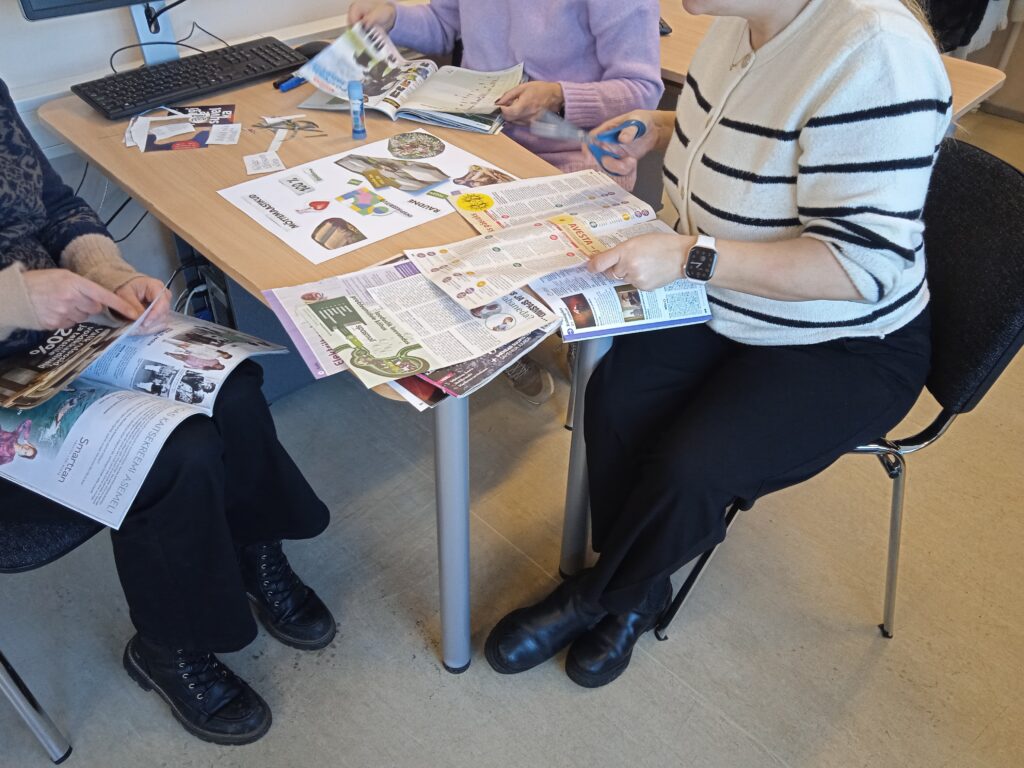
The training days were greatly enriched by the use of diverse learning methods, both through digital platforms and hands-on activities. We used tools such as Padlet, Padlet Sandbox, and Slido, which made discussions engaging and interactive. Participants had the opportunity to experiment, share their opinions, and collaboratively map out ideas. I hope these tools also provided them with practical tips on how to use digital environments creatively yet safely in their daily work. “Lõika-kleebi-liimi” rubriigis meisterdasime meeskonnatöö kollaaži, läbi mille said osalejad mõtestada meeskonna tähtsust klienditöös.

The collages created by the participants reflected creativity, collaboration, and a collective perspective on the topics discussed.
Guidance Skills, Teamwork, and Empowering Experiences

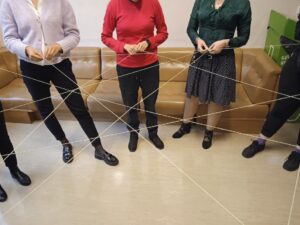
A particularly memorable activity was building with Lego, using playful methods to explore the topics covered in the training. At first glance a simple exercise, it proved to be an excellent way to develop guidance skills and teamwork. The task highlighted the importance of clear communication, defined roles, and trust among team members. It served as a great reminder that learning doesn’t always have to take the form of a lecture—experiential and hands-on activities often leave the deepest impact. Discussions during the training were honest and open, and the sharing of experiences was empowering. Such conversations help to better understand how to create a safe, supportive, and growth-oriented environment for both those being guided and colleagues alike.
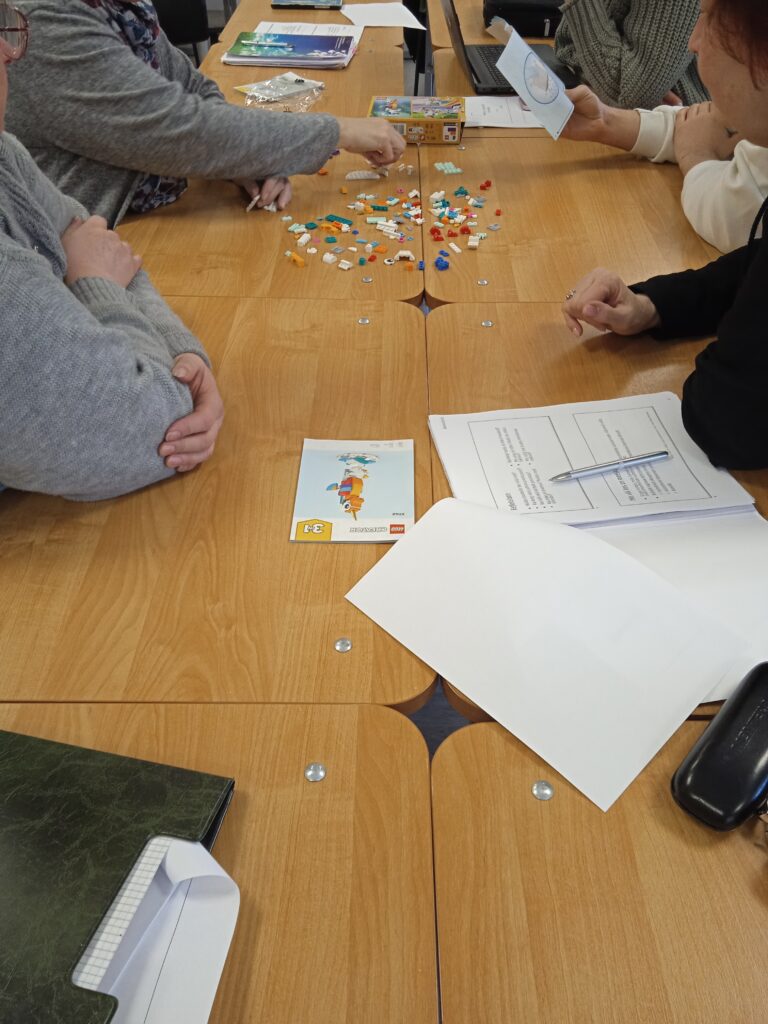
The Lego building exercise highlighted the power of teamwork, the importance of clear guidance, and the resourcefulness that emerges through collaboration.

The training days offered plenty of opportunities for growth, meaningful discussions, and joyful interactions. The participants’ supportive and encouraging feedback confirmed the importance of the topics covered and motivates continued in-depth engagement with them. I am sincerely grateful to both the participants and the organizers for their trust—shared learning and the exchange of experiences truly lay the foundation for effective collaboration.
How a hobby became a mini-training within a microdegree program

Some stories begin with a interest and gradually grow into a hobby. My journey with growing blueberries began years ago from a very practical desire: to grow something healthy and tasty in my own garden. Growing blueberries at home is not complicated, but it does require knowledge, consistency, and the creation of the right conditions. Trial and error, personal experience, and years of learning have been my greatest teachers.

A training within a university microdegree program

When, as part of the microdegree program, we were tasked with delivering a 15-minute micro-training session, I saw it as a good opportunity to step outside my usual professional field and experiment with teaching a completely different topic — delivering a training session titled ‘The Basics of Growing Blueberries at Home.’ This confirmed that knowledge developed from a practical hobby can also be valuable and relevant in an academic environment.

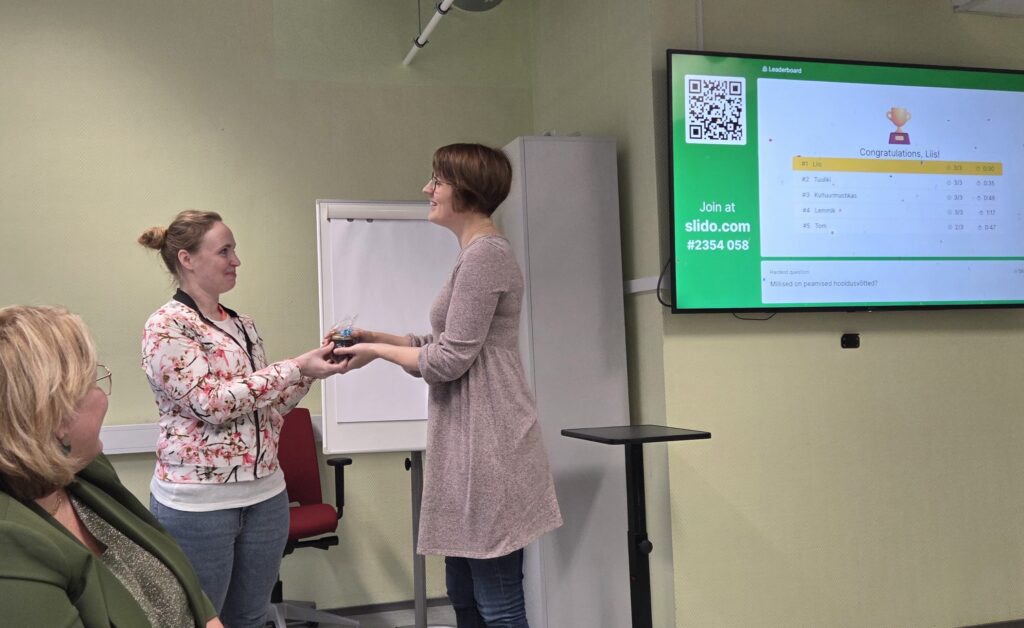
During the training, I shared practical knowledge on selecting blueberry plants, suitable growing conditions, and proper care techniques. A short quiz conducted via the Slido platform helped reinforce the learning, bringing a pleasant sense of excitement among participants and clearly demonstrating that learning does not have to be a one-way lecture — the best learning experiences emerge when ideas can flow freely. This mutual learning made the training lively and meaningful and also enriched me greatly as a trainer.

An extra touch of excitement was added by the quiz prize — jam made from blueberries grown by me.

A sense of gratitude and feedback

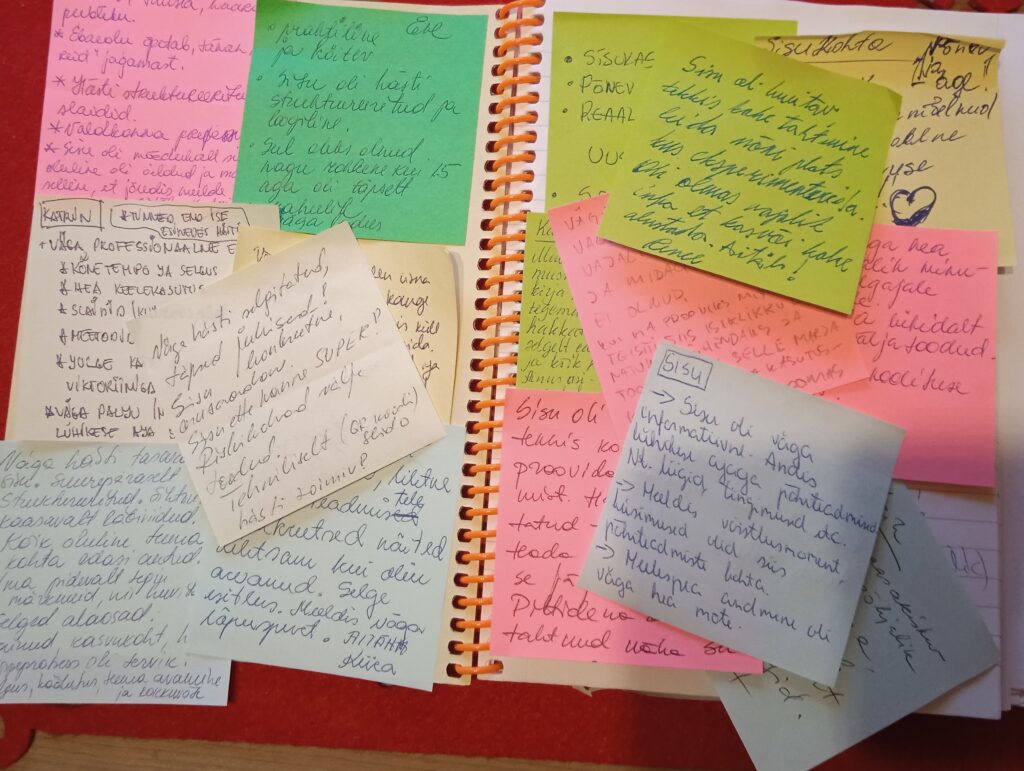
It was especially heartwarming to receive encouraging and constructive feedback — feedback that moves you forward, offers new ideas and points for reflection, and brings joy. Several participants noted that the training sparked their interest in trying to grow blueberries themselves. This sense of gratitude — knowing that my experience genuinely inspired interest — is the clearest indicator that the training was successful.

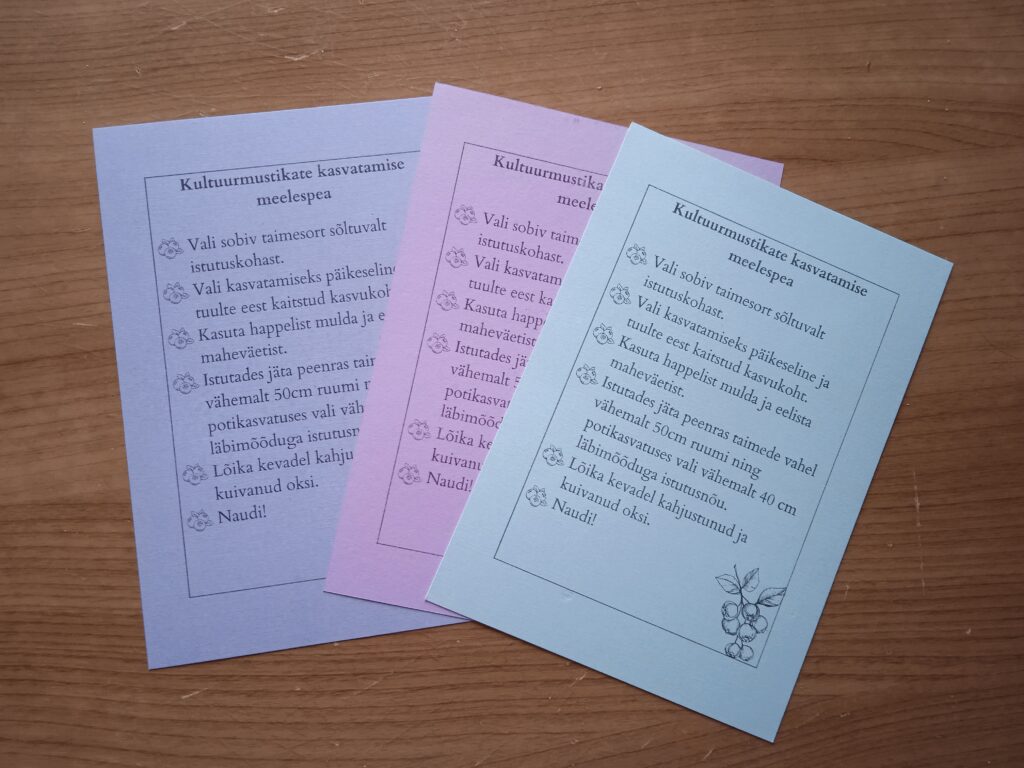
As training materials, I prepared a compact sheet on blueberries, allowing each learner to revisit the basics and try them out if they wished. From the feedback, I gathered that the material was well received :).

Encouraging and empowering feedback…

MI would like to thank my classmates and lecturers, whose support and encouragement were the greatest compliment, enriching the training and providing me with valuable feedback. With your support, my hobby truly became a wonderful training experience.

Training "Comprehesive Approach to Rehabilitation (CARe)" that touched and inspired

Just recently, in cooperation with Pärnu German Technology School, the training "Theoretical Foundations and Practical Tools of the CARe (Comprehensive Approach to Rehabilitation)" came to an end. Based on the CARe methodology, the training was more than just learning — it was an inspiring journey where theory and practice intertwined, and participants were able to experience firsthand how a recovery-oriented approach truly works. Over the course of four days, we created a framework for the CARe methodology that supported both meaningful discussions and joyful discovery.”

What made the training truly special was the participants’ activity, openness, and courage to share. The group work was lively and meaningful, the examples were vivid, and the discussions broadened our understanding of recovery from different perspectives. We explored the origins of the CARe methodology, its foundations and values, and examined its key features and content. Through various individual, group, and joint activities, we collectively unpacked the essence of the CARe methodology and discovered new sides of ourselves as well. Through theory and sincere, practical stories, we discussed how we can support clients on their journey.

“Everything was well thought through - interesting and practical.” (participant`s feedback)

The training left us with a shared feeling that every person’s journey is meaningful and valuable, and that our role is to help them see their own resources and support them on the path from intention to goal. The CARe methodology provides the tools, but real change is created by the supportive people, their warmth, and their ability to truly listen.

“For me, the best part was the well-designed learning activities that enriched our own toolbox.” (participant`s feedback)

As a trainer, it was a joy to see that each participant contributed their own special energy, creating a dialogue and a learning space where it felt good to be. The most valuable moments were those when I saw participants starting to connect the theory with their inner insights and practical stories. That is exactly when learning in its truest form begins. I feel deep gratitude for the sincere discussions and the courage to share. Each participant’s contribution made the training multi-layered and vibrant. It is precisely for encounters like these that this work is worth doing

“Thank you very much — a very good training and an excellent trainer!” (participant`s feedback)